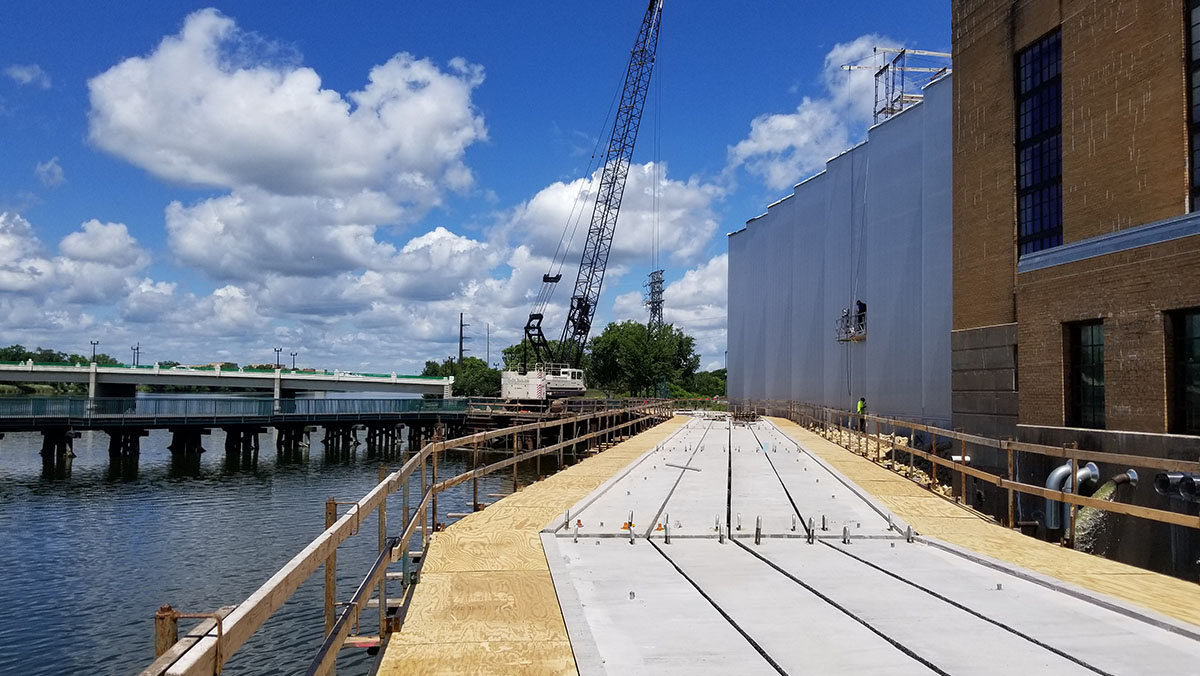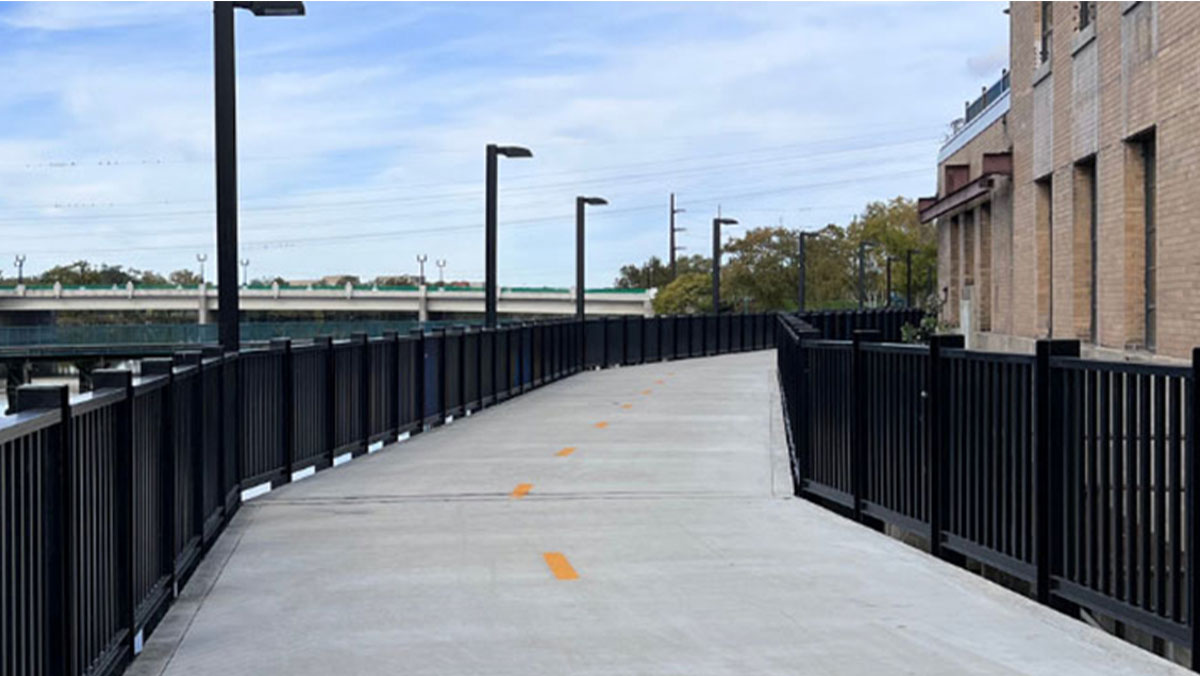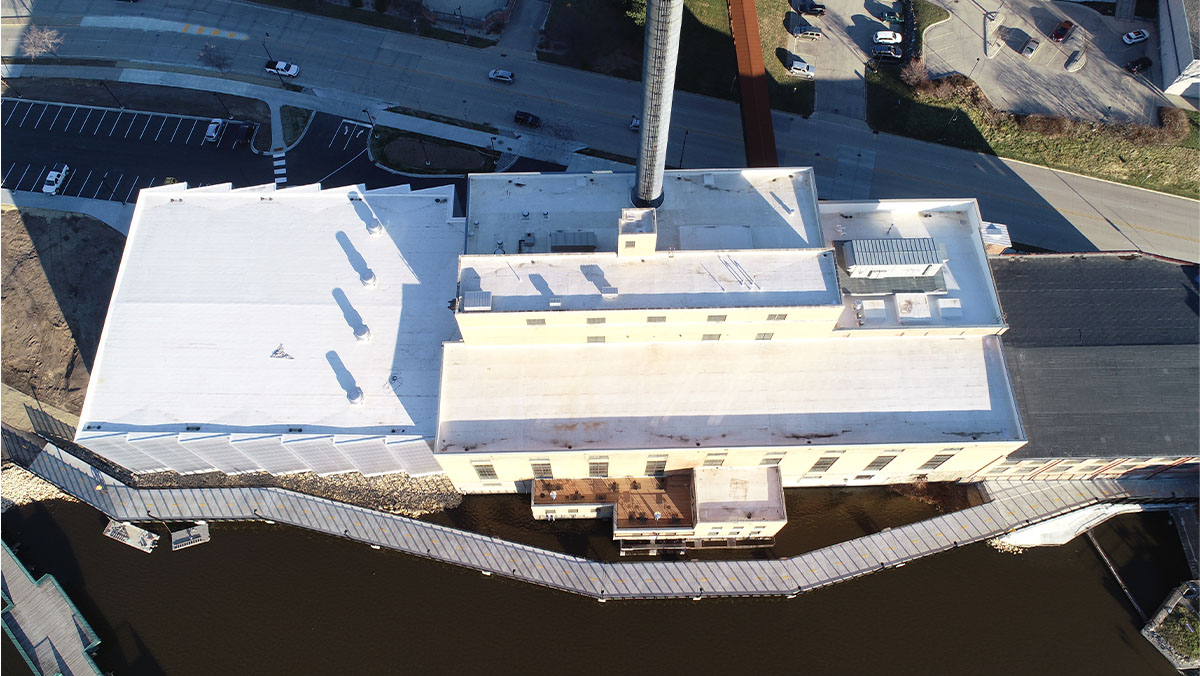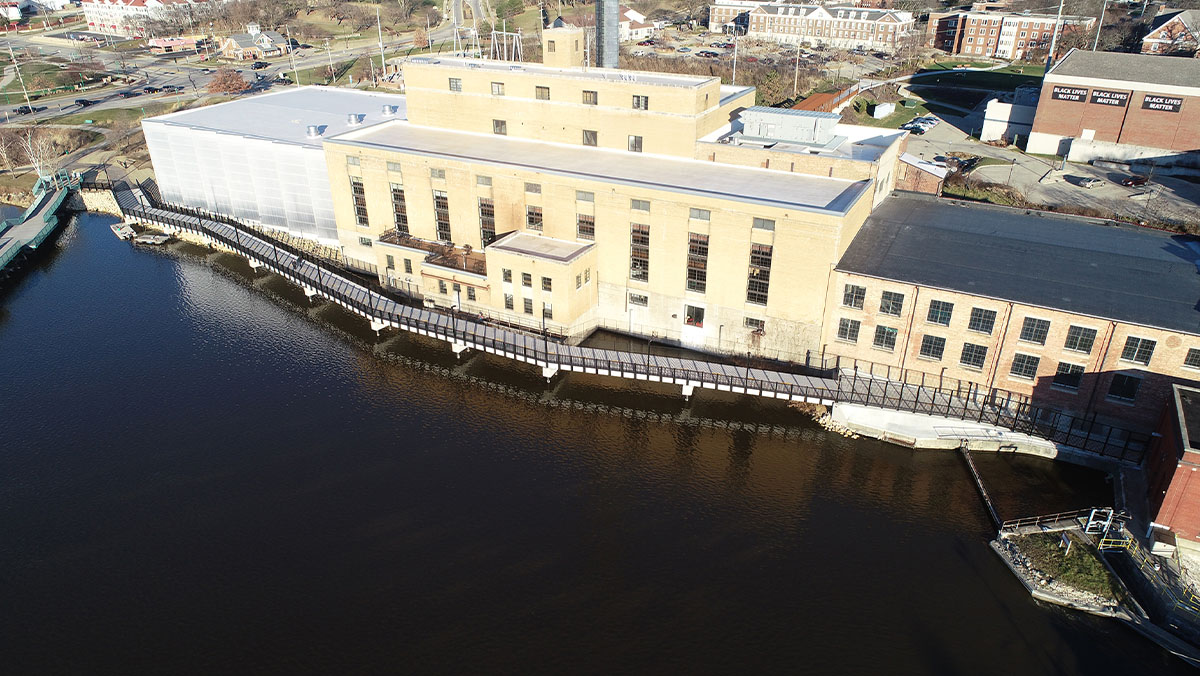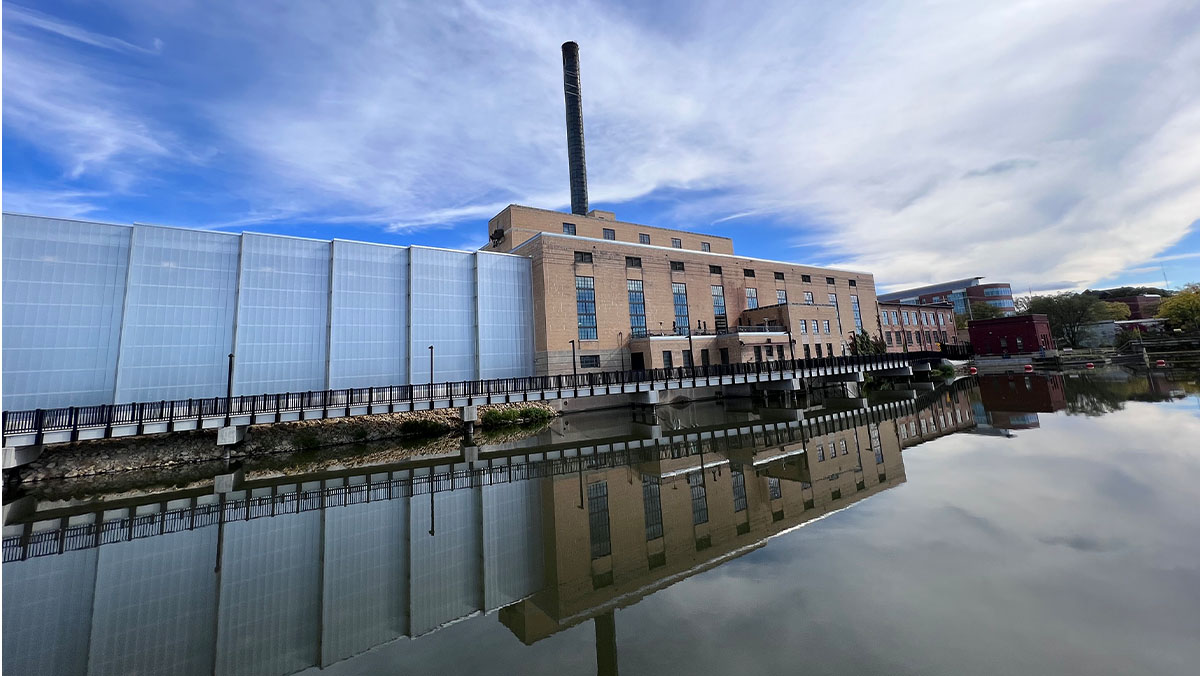
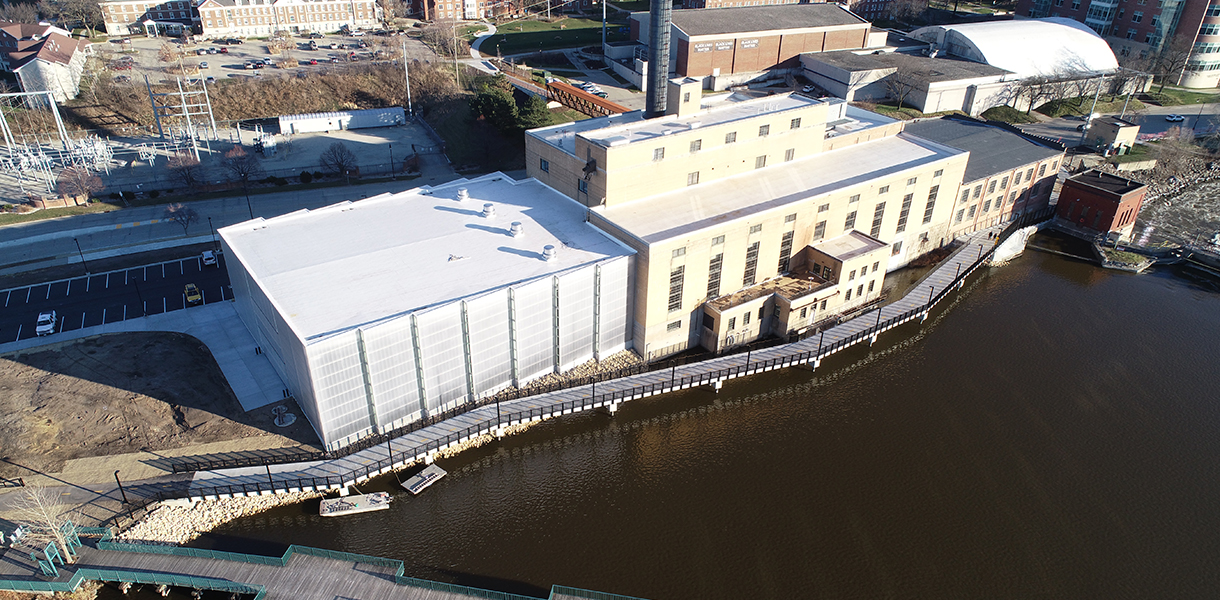
This 10-span pedestrian bridge and land path add a unique and essential connection along Beloit’s riverfront.
The Powerhouse Riverwalk project provides a unique shared-use path connection that surrounds the Beloit College Powerhouse along the Rock River and fills a critical gap in the City of Beloit’s riverfront trail system. The project was a true public/private partnership among the City of Beloit, WisDOT, and Beloit College, and represents a key component of the city’s broader riverfront revitalization efforts.
The Riverwalk consists of land-based shared-use paths near the north and south termini that tie seamlessly into existing city path systems. Between these termini, the trail transitions onto a ten-span pedestrian bridge system that overlooks the Rock River, the Beloit Dam, and the Wood Family Fishing Bridge. The bridge and path alignment were carefully designed to navigate substantial vertical grade changes along the river corridor while accommodating future building access points and multiple floor elevations within the repurposed Powerhouse structure.
Project development presented unique challenges related to complex vertical geometry and field-fit conditions around existing infrastructure. Batterman provided comprehensive design and construction management services for the project (excluding structural design), requiring close coordination with project partners and stakeholders throughout implementation.
The Powerhouse Riverwalk was recognized for engineering excellence with the 2022 ACEC Wisconsin Best in State Award.
Powerhouse Building Addition and Site Improvements
As part of the larger Beloit College Powerhouse redevelopment, a significant building addition was constructed to support the adaptive reuse of the former Alliant Energy Blackhawk Generating Station into a multi-use student center. The addition houses an indoor athletic field and was built over the site of the former coal yard, an area impacted by contaminated soils.
Batterman provided site design, permitting, and construction management services for this complex addition. The work required extensive coordination with the Wisconsin Department of Natural Resources and other regulatory agencies to properly manage and remediate contaminated soils while maintaining project progress and safety.
In addition to the building addition, Batterman designed a geothermal heating and cooling system to support the facility’s sustainability goals. The system includes an external pump station with a suction line extending into the Rock River, drawing water through the geothermal system to efficiently heat and cool the Powerhouse.